The Traveling Ashlar Weekly Trestleboard | Edition 0001 | Week of August 17, 2026 · A.L. 6026

Edition 0001 Week of August 17, 2026 · A.L. 6026
Updated every Monday Last updated August 17, 2026 · A.L. 6026
Masonic News From Around the World
Stories of travel, Brotherhood, history, and the people and places that keep the Craft moving.
Traveling Ashlar has always been about more than where we go. It is about who we meet, what we learn, and the history we carry with us.
Each week, we look around the Craft for stories worth sharing. Old Lodges, unusual traditions, Masonic landmarks, Brothers doing good work, forgotten history, strange headlines, and the occasional story that could only happen in Freemasonry.
This week takes us from Italy to Queens, London to northern England, and halfway around the world.
Different places. Different stories. Same Brotherhood.
Here is what caught the Traveling Ashlar eye this week.

 Follow
 ITALY
Rome, Italy
ITALY
Rome, Italy
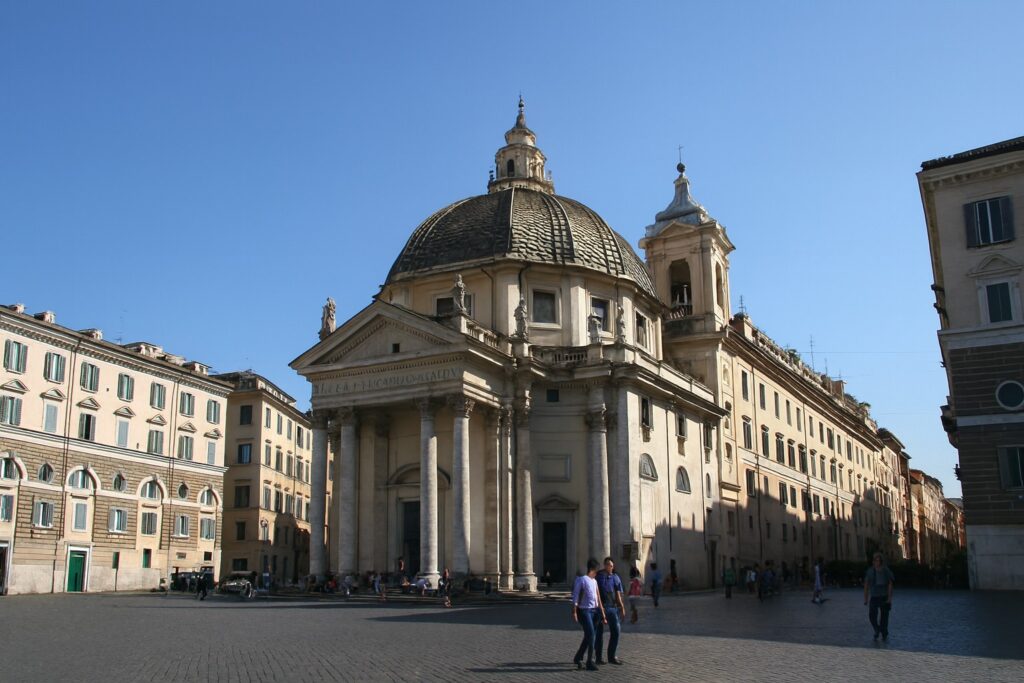
Two Canceled Funerals Reopen an Old Argument Between Rome and Freemasonry
ROME, ITALY | AUGUST 14, 2026 · A.L. 6026
Two Catholic funeral services for prominent Italian Freemasons were canceled at the last minute this month, bringing one of the Craft's oldest institutional disputes back into public view and raising new questions about recent attempts at dialogue between Catholic and Masonic leaders in Italy.
The first involved Bruno Battisti D'Amario, 88, an accomplished classical guitarist known for his long collaboration with film composer Ennio Morricone. D'Amario died on August 5, and a funeral Mass was scheduled for August 7 at Santa Maria in Montesanto in Rome, commonly known as the Artists' Church. According to the National Catholic Register, church officials halted the Mass after D'Amario's affiliation with the Grande Oriente d'Italia, or Grand Orient of Italy, became known publicly. The organization's memorial described him as a 33rd Degree Freemason.
Days later, another Catholic funeral was stopped in Camporosso, near Sanremo. Mario Tarducci, 73, a former Grand Master of the Grand Orient of Italy, had been scheduled to receive funeral rites at the Church of St. Mark the Evangelist. Bishop Antonio Suetta of Sanremo-Ventimiglia intervened after Tarducci's Masonic affiliation appeared in local reporting. In both cases, Catholic authorities cited provisions of canon law governing when ecclesiastical funerals may be denied.
For Brothers familiar with the history, none of this arrives without baggage. The Catholic Church's formal opposition to Freemasonry dates at least to Pope Clement XII's 1738 bull In eminenti. More recently, the Vatican's Dicastery for the Doctrine of the Faith reaffirmed in November 2023 that active Masonic membership is incompatible with Catholic doctrine. That position has remained official even as individual Catholic and Masonic leaders in Italy have experimented with dialogue.
That dialogue became especially visible in February 2024, when senior representatives from both sides met publicly in Milan. The meeting included discussion of whether a more permanent conversation between the Church and Italian Freemasonry was possible. The events of this month show just how far apart the institutions remain when theological principle leaves the conference room and arrives at the church door.
For Freemasons, this is more than another strange headline from Italy. It is a modern chapter in an argument that has followed the Craft for nearly three centuries. The names change. The question apparently does not.
Source: National Catholic Register, August 14, 2026
Additional reference: Dicastery for the Doctrine of the Faith
 ENGLAND
London, England
ENGLAND
London, England
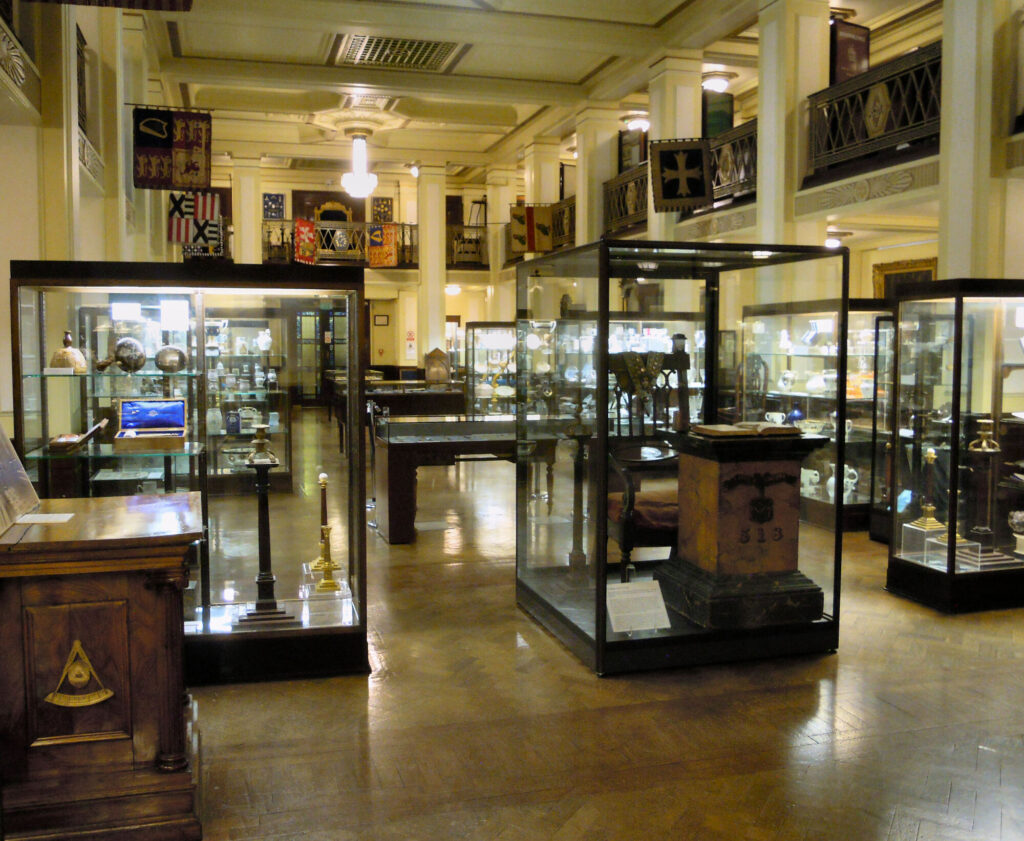
Inside the Vault: Royal Masonic Treasures Return to View in London
LONDON, ENGLAND | AUGUST 3, 2026 · A.L. 6026
The Museum of Freemasonry in London has opened its collections for another installment of the United Grand Lodge of England's Craftcast, this time focusing on objects connected with members of the British Royal Family who were Freemasons.
The episode, published August 3 under the title "Royal Freemasonry Treasures Revealed," features rarely displayed regalia and personal objects associated with royal Masons including King William IV and King Edward VIII. Museum specialists use the objects to tell a broader story about the unusually long relationship between British Freemasonry, the monarchy and public life.
That relationship is deeper than a few ceremonial aprons stored in London. UGLE records note that Navy Lodge No. 2612 alone counts several monarchs among its former members, including Edward VIII, Edward VII, George VI and King George II of the Hellenes. Prince Philip, Duke of Edinburgh, was initiated into Navy Lodge in 1952 and remained a member until his death. The current Duke of Kent has likewise occupied one of the most visible positions in English Freemasonry as Grand Master of UGLE.
The setting is historically significant in its own right. The Museum of Freemasonry began as a members' library in 1838 and today occupies Freemasons' Hall on Great Queen Street. The present Art Deco building was completed in 1933, originally conceived as a memorial to more than 3,000 English Freemasons who died during the First World War. Its collections now preserve books, certificates, regalia, art and objects documenting roughly three centuries of organized English Freemasonry.
For Brothers interested in material Masonic history, objects like these matter because they put names, dates and physical evidence around stories that are often reduced to lists of "famous Freemasons." A piece of regalia worn by a king tells us something a membership list cannot. It shows how Masonry was actually carried into court, military service, family life and public ceremony.
There is also something wonderfully contradictory about modern Freemasonry trying to convince the public that very little is hidden while simultaneously announcing that the museum has opened the royal Masonic vault.
Some traditions are worth keeping.
ENGLAND
Ryton, Tyne and Wear, England
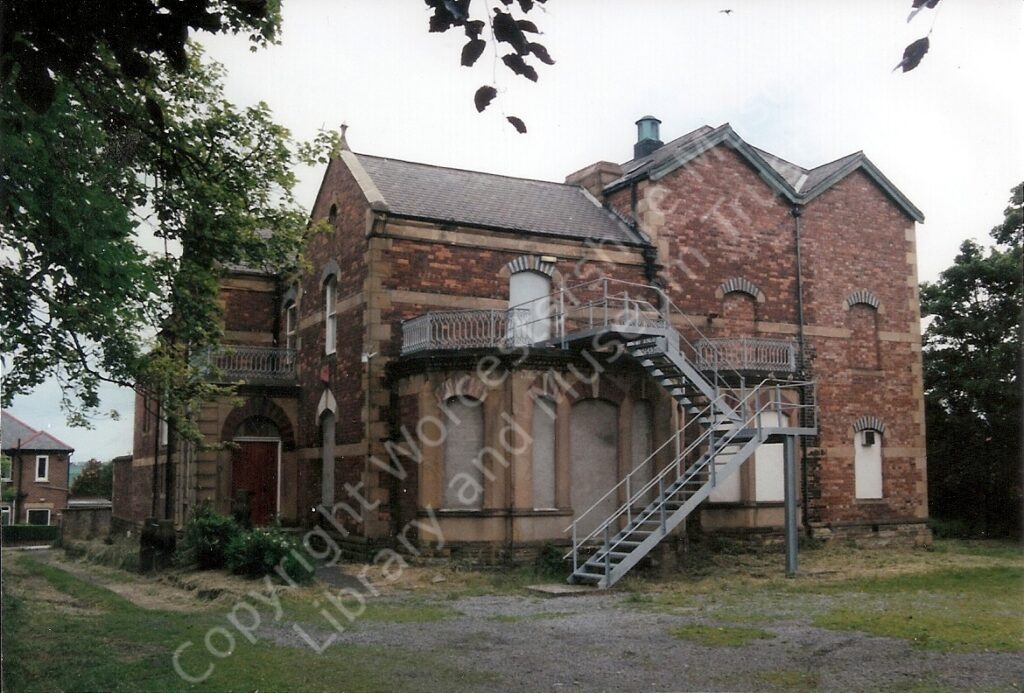
Ghost Hunters Spend a Summer Night Inside a Century-Old Masonic Hall
RYTON, TYNE AND WEAR, ENGLAND | AUGUST 14, 2026 · A.L. 6026
A Victorian house that has served Freemasons for nearly a century is the setting of a new paranormal investigation released this month by the British podcast How Haunted?
Ryton Masonic Hall began life as a private residence known as Oakfield House. According to the program, the building is more than 150 years old and has been used as a Masonic meeting place for almost a century. In June, podcast host Rob Kirkup joined investigators from Spiritus Paranormal for an overnight examination of the property during an unusually hot summer evening in northeast England. A 12-minute preview of the investigation was released August 14, with the complete program running nearly two hours.
The claims attached to the building are exactly what one expects from an English Victorian house after dark. Previous visitors and paranormal investigators have reported disembodied voices, footsteps in apparently empty rooms, objects moving without explanation and shadow-like figures. One recurring story concerns the figure of a child reportedly seen, and according to the podcast, possibly captured on camera earlier this year. None of those claims has been independently established, and the program itself frames the night as an investigation rather than proof of supernatural activity.
The Masonic setting inevitably adds another layer. To a Brother, a lodge room is familiar territory. To someone standing in one at midnight with the lights off, the same symbols, old furniture, portraits and ceremonial spaces can look considerably different.
That difference is part of why Masonic buildings have become such reliable raw material for ghost tours, television programs and paranormal groups. Many occupy old houses, former schools, nineteenth-century halls and buildings with enough accumulated human history to generate stories before a square and compasses ever gets added to the wall.
Is Ryton Masonic Hall haunted? The Trestleboard is going to leave that determination to better equipped Brethren.
We would, however, make certain the Tyler checked the door.
 UNITED STATES
Astoria, Queens, New York
UNITED STATES
Astoria, Queens, New York
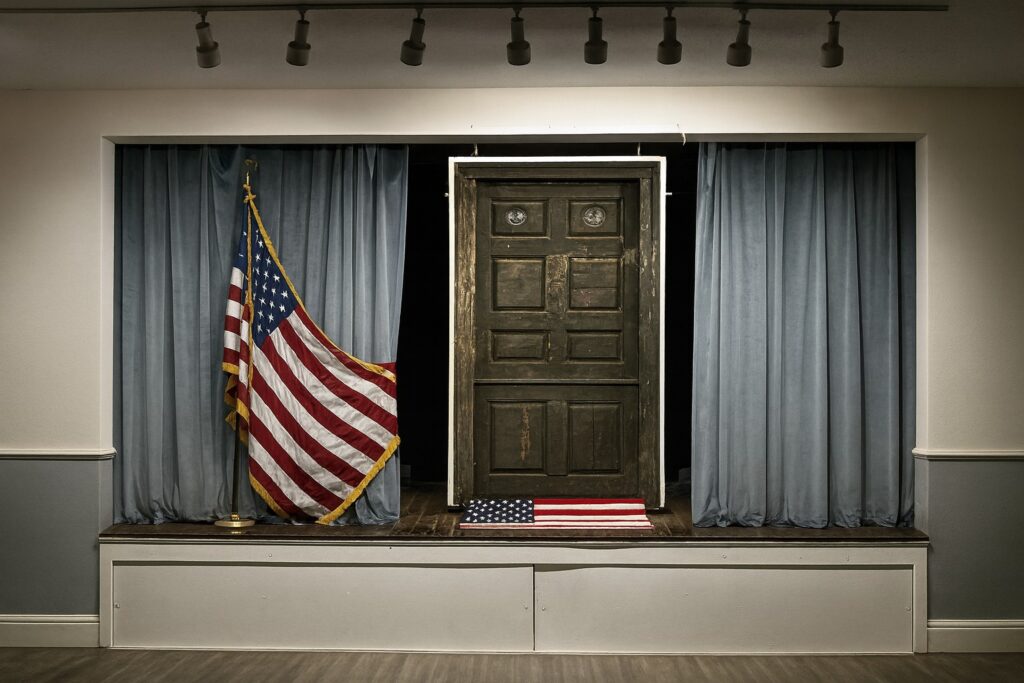
A Revolutionary-Era Door Finds an Unusual Home Inside a Queens Masonic Temple
ASTORIA, QUEENS, NEW YORK | AUGUST 16, 2026 · A.L. 6026
Visitors walking into the Advance Masonic Temple in Astoria this summer are finding something considerably older than the Lodge itself: a colonial-era door believed to date to about 1765, complete with a mark associated with British confiscation during the American Revolution.
The Blackwell Door is being displayed by the Greater Astoria Historical Society as part of programming surrounding America's 250th anniversary. The door once belonged to the Blackwell family's home in Ravenswood, a community whose old landscape has largely disappeared beneath modern Queens. The historical society and Astoria Masons describe it as one of the area's rare surviving colonial artifacts.
What makes the object especially interesting is a carved symbol described by the exhibitors as a British "Arrow of Confiscation," or crow foot. The mark is associated in the exhibit with property taken during the Revolutionary War. Rather than sitting behind glass in a major Manhattan institution, the artifact is spending the summer at Advance Masonic Temple, 21-14 30th Avenue in Astoria.
The August 16 opening was part of a series of public exhibition dates that began over the summer. Another exhibition is scheduled for August 23, with additional programming connected to the historical society's America 250 activities. The location is itself an interesting example of something Masonic buildings have quietly done across the country for generations: function as community halls, voting locations, meeting rooms, archives and temporary museums in addition to housing Lodge meetings.
For Brothers interested in early American Masonry, the object is not inherently Masonic. That is precisely what makes the story interesting. A piece of Revolutionary-era Queens history has survived long enough to be interpreted and displayed inside a Masonic Temple during the nation's semiquincentennial.
We spend a great deal of time looking for Masonic history inside museums.
Sometimes the museum walks into the Lodge.
UNITED STATES
Los Angeles, California
Seventy-Five Years in the Craft: California Lodge Honors an Extraordinary Masonic Milestone
LOS ANGELES, CALIFORNIA | AUGUST 16, 2026 · A.L. 6026
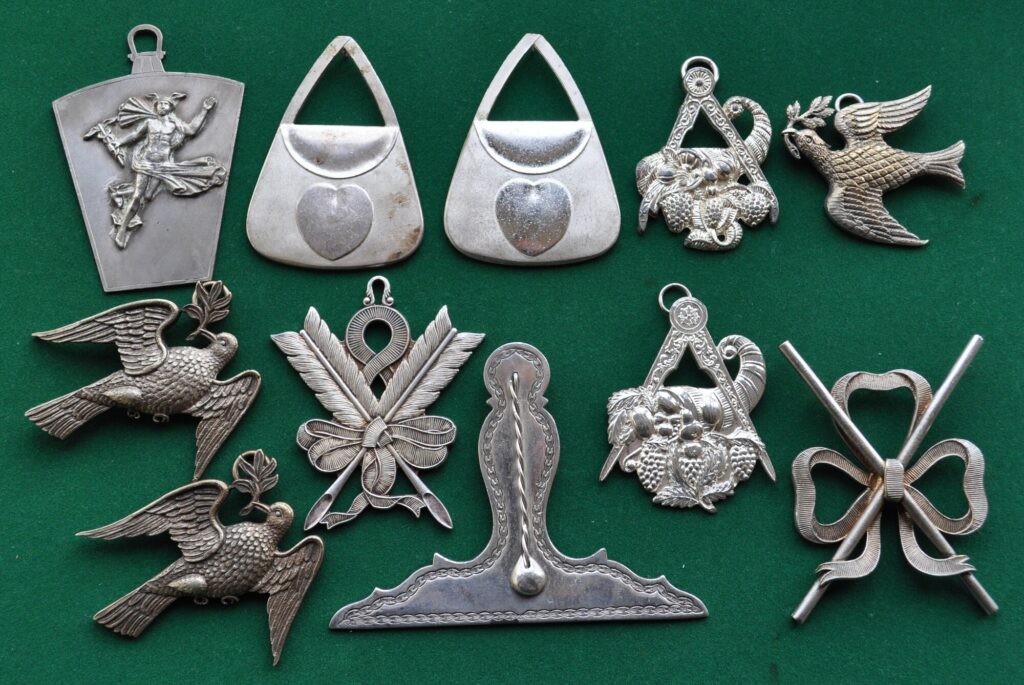
Liberal Arts Lodge No. 677 in Los Angeles scheduled a rare Masonic milestone Sunday evening: the presentation of a Diamond Jubilee Award and 75-year pin to Brother Bob Ruvelson.
The event was listed by the Grand Lodge of California for August 16 at Liberal Arts Lodge on Westwood Boulevard. The program called for a social hour beginning at 4 p.m., followed by dinner and the Diamond Jubilee presentation. Grand Lodge officers, Masons, spouses and partners were among those invited.
Seventy-five years of membership is a number worth sitting with.
A Mason reaching that anniversary in 2026 would have begun his Masonic journey around 1951. Harry Truman was president. Television ownership was still spreading into American homes. The Korean War was underway. Interstate highways as we know them did not yet exist. A great many of the men who would eventually sit beside him in Lodge had not yet been born.
Inside Freemasonry, those decades represent hundreds of stated meetings, installations, degrees, memorial services, dinners and introductions. Lodge officers change. Buildings are sold or rebuilt. Jurisdictions revise procedures. Ritual books become worn and are replaced. One generation teaches the next, which eventually discovers that it has become the generation doing the teaching.
That is why long-service presentations can look deceptively modest. A pin is small. What it represents is not.
The Grand Lodge calendar identifies Ruvelson's recognition specifically as its Diamond Jubilee Award, marking 75 years in the fraternity. At the time of this edition, Traveling Ashlar found the confirmed event listing but not a separate post-event report, so we are describing the presentation as scheduled rather than independently confirming the proceedings after the fact.
There are louder stories in Freemasonry this week. There may not be a better reminder of what Brotherhood looks like over a lifetime.
Source: Masons of California
 SIERRA LEONE
Freetown, Sierra Leone
SIERRA LEONE
Freetown, Sierra Leone
In Freetown, a Masonic Water Project Measures Relief in 10,000-Liter Tanks
FREETOWN, SIERRA LEONE | AUGUST 7, 2026 · A.L. 6026
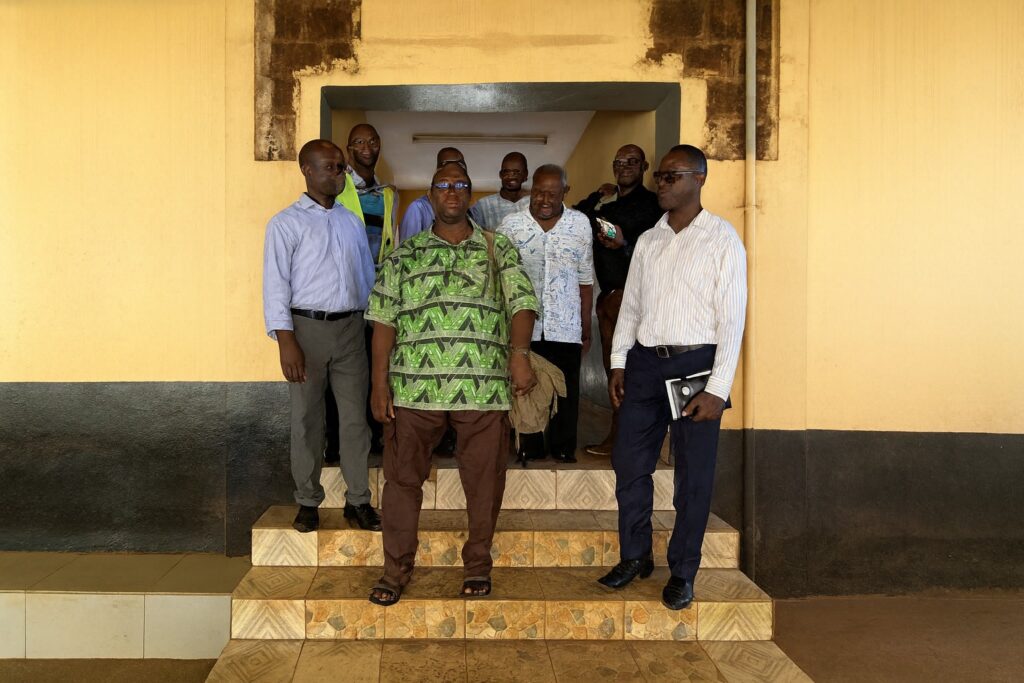
A Masonic charity project at Kissy Mental Hospital in Freetown has completed two major phases of a water rehabilitation system designed to give patients and staff a more dependable supply through increased storage and rainwater collection.
The project was undertaken by St. George's Lodge No. 2506 EC during its 2025-2026 administration. Its first phase installed five 10,000-liter water tanks, each on reinforced concrete foundations, at the men's ward, women's ward, kitchen, laundry and administration building. Together, the tanks provide 50,000 liters of additional storage capacity.
The second phase tackled the other side of the problem: getting water into those tanks. Gutters and piping were installed to collect rainfall from hospital roofs and channel it into the new storage system during Sierra Leone's rainy season. Work on the first phase took place between October and December 2025, while the rainwater-harvesting portion was completed between May and July 2026.
There had been a third idea. The Lodge investigated drilling a borehole that could supply water during the dry season, but the projected cost proved substantial. Rather than leave several pieces of an ambitious plan unfinished, the Lodge concentrated its available resources on completing the storage and rainwater systems. It is the sort of decision familiar to anyone who has ever served on a Lodge committee: determine what can actually be accomplished, fund it and finish the work.
The financing is as interesting as the construction. Donations came from Brethren in Sierra Leone, the United Kingdom and the United States. Local fundraising included a December 2025 Duke of Connaught Lecture and Charity Dinner featuring WBro. Dr. Robert Hammond of Quatuor Coronati Lodge No. 2076. Additional assistance was organized in Britain, while members of St. George's Lodge living in the United States and members of Sojourner Kilwinning Lodge No. 1798 under the Grand Lodge of Washington, D.C. helped mobilize American support.
The project was led by WBro. Chyppee Palmer, Charity Steward, and WBro. Ralph Taylor-Smith, Worshipful Master, working with hospital leadership and local technical contractors.
There is no mystery here and very little ceremony. Five tanks, concrete bases, gutters, pipe, Brethren in three countries and a hospital that needed water.
Sometimes the working tools are quite literal.
 AUSTRALIA
Central Coast, New South Wales, Australia
AUSTRALIA
Central Coast, New South Wales, Australia
On Australia's Central Coast, Masonic Support Reaches the Surf
CENTRAL COAST, NEW SOUTH WALES, AUSTRALIA | AUGUST 10, 2026 · A.L. 6026
The relationship between Freemasons and Soldiers Beach Surf Life Saving Club on Australia's Central Coast has grown into a major community sponsorship, with Masonic contributions now totaling more than $60,000 over the life of the partnership.
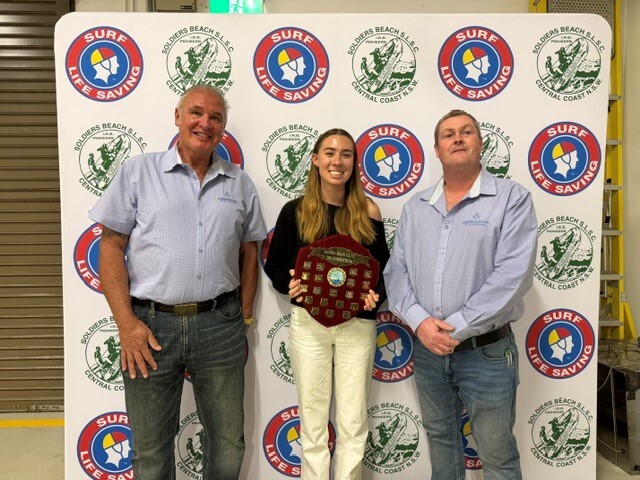
Freemasons on the Central Coast were recognized as major sponsors during the club's 2025-26 presentation night, held May 9 and reported by Freemasons NSW & ACT on August 10. Representatives Leigh Pollard and Ben Falconer attended on behalf of the Masonic organization.
The numbers make the story more substantial than a ceremonial plaque. Freemasons on the Central Coast report contributing more than $7,000 this year, following more than $13,000 the previous year. Combined, the organization says it has provided roughly $20,000 in the past two years and more than $60,000 since first becoming a sponsor of Soldiers Beach SLSC.
During the presentation night, the Masonic representatives presented two significant club awards. Jaydee Lourens received Junior Club Person of the Year, while Tony Axford received the Greg Martin Award for Conspicuous Service. The latter award carries an additional Masonic connection: Greg Martin was a Past Master of Lodge Toukley.
To an American Mason, the surf lifesaving movement can require a little translation. Australia's surf life saving clubs are deeply embedded volunteer institutions, training members in aquatic rescue, beach patrol, first aid and youth development. At Soldiers Beach, the awards presented that evening included qualifications such as Bronze Medallions and Inflatable Rescue Boat crew and driver certifications. These are not merely recreational clubs sitting beside the ocean. They help develop and maintain the people expected to respond when something goes wrong in it.
That makes the partnership a particularly good expression of relief. The Lodge is not trying to duplicate the work of professional lifesavers. The Brothers are helping people already trained to do it.
Masonic charity sometimes arrives as a scholarship, sometimes as a hospital donation and sometimes, apparently, wearing sunscreen.
Source: Freemasons NSW & ACT
Additional reference: Freemasons on the Central Coast
Have a Masonic Story?
Know about a Lodge with a story worth telling? A historic building, unusual degree, forgotten artifact, traveling Brother, restoration project, anniversary, discovery, or piece of Masonic history that deserves a wider audience?
The Trestleboard wants to hear about it.
Submit stories, tips, photographs, or article ideas to:
newsletter@travelingashlar.com
Wear. Share. Travel.
blog.travelingashlar.com
Wear. Share. Travel.
Top selling items
Pins, shirts, and gifts Brothers actually buy. No membership required.
Masonic Baseball Lapel Pin | Freemason Baseball Gift
Price range: $9.99 through $18.95
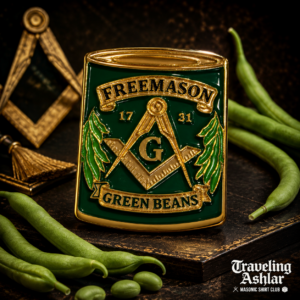
Green Beans Lapel Pin | Funny Freemason Gift
Price range: $9.99 through $18.95

Hot Sands Comic Book | Masonic Ritual Gift
$12.99
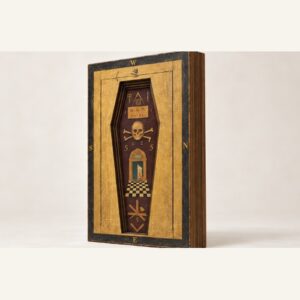
Masonic Tracing Board | 5-Layer Wooden Masonic Art
From $19.99
Subscribe to the Weekly Trestleboard
Get the latest Masonic news from across the world, and the travels that go with it.
One edition every Monday. Stories from lodges, roads, and Brothers still at the work.
Past issues
Every Monday edition, kept on the shelf.
- Edition 0008 Week of October 12, 2026 · A.L. 6026
- Edition 0007 Week of October 5, 2026 · A.L. 6026
- Edition 0006 Week of September 28, 2026 · A.L. 6026
- Edition 0005 Week of September 21, 2026 · A.L. 6026
- Edition 0004 Week of September 14, 2026 · A.L. 6026
- Edition 0003 Week of September 7, 2026 · A.L. 6026
- Edition 0002 Week of August 24, 2026 · A.L. 6026
- Edition 0001 Week of August 17, 2026 · A.L. 6026
Posts
Published Traveling Ashlar posts on Facebook. Tap a post to open it there, then share it to your own page or profile.


