Traveling Ashlar Blog Goose and Gridiron
The Unofficial Vegetable of Freemasonry
Why do Freemasons joke about green beans? Explore the Masonic tradition of Lodge dinners, fellowship, the famous green bean inside joke, and the Traveling Ashlar Masonic Canned Green Beans Lapel Pin.
Why Green Beans Belong on a Masonic Lapel Pin
There are symbols in Freemasonry that require entire lectures to explain.
The Square.
The Compasses.
The Level.
The Plumb.
Then there are green beans.
Nobody needs a lecture on green beans.
You simply need to have eaten enough dinners in enough Masonic Lodge dining halls.
Eventually, you understand.
A Brother places a plate in front of you.
Some kind of meat.
A starch.
A dinner roll.
And there they are.
Green beans.
Again.
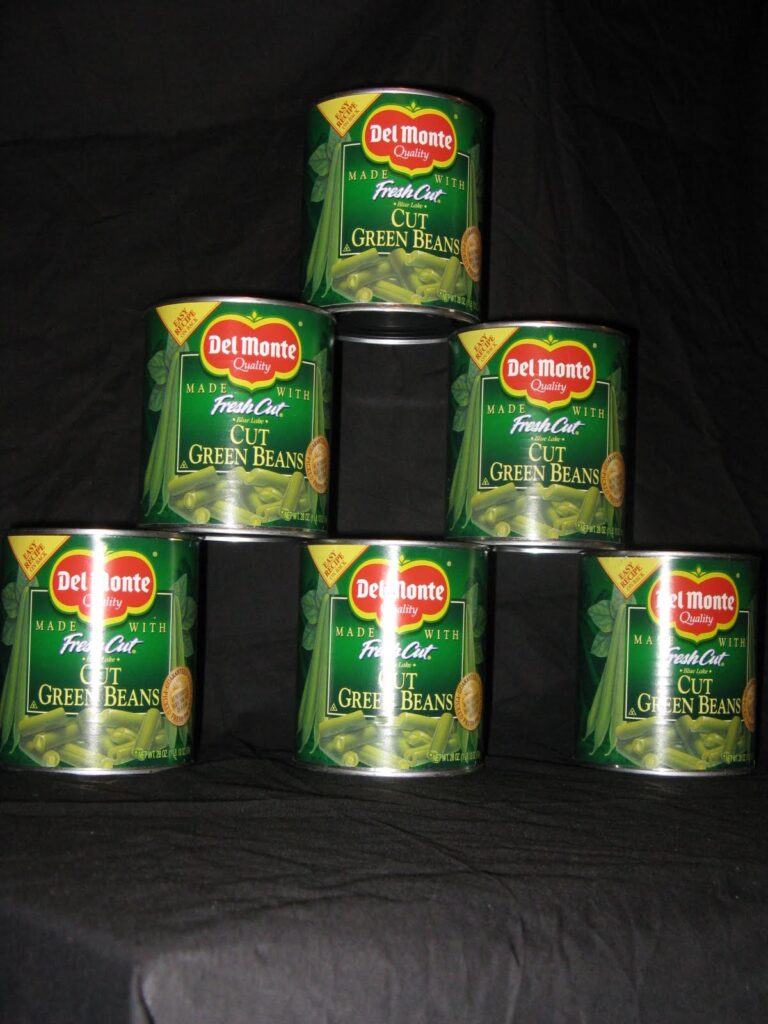
At some point in American Freemasonry, the humble green bean became less of a vegetable and more of an unofficial working tool.
Nobody voted on it.
There is no known Grand Lodge edict requiring two scoops beside the mashed potatoes.
Albert Pike, as far as I can determine, did not write 700 pages explaining their hidden meaning.
They just keep showing up.
And that is exactly why Traveling Ashlar turned a can of green beans into a Masonic lapel pin.
Shop the Masonic Green Beans Lapel Pin
Because sometimes the best Masonic symbols are not ancient at all.
Sometimes they are sitting next to the chicken.
First, The Important Historical Disclaimer
I went looking for the definitive origin of the Freemason green beans joke.
I wanted a year.
A Lodge.
A Brother.
Something I could point to and say:
“There. That guy started all of this.”
I could not find one.
That is actually part of what makes it better.
There are plenty of theories floating around Masonic conversations and online forums, but I have yet to find reliable historical documentation proving exactly when or where green beans became the unofficial vegetable of American Freemasonry.
What we can document is that the joke has been circulating among Masons for years.
A Masonic writer was calling green beans the “Unofficial Masonic Vegetable” as far back as 2010, describing that familiar feeling of seeing them on a Lodge dinner plate. In 2018, The Masonic Roundtable devoted an episode to Lodge dinners and referred to green beans as a familiar sign of the Masonic experience.
Today, new Entered Apprentices still wander into Masonic online communities asking some variation of:
“Okay, what’s with the green beans?”
Which means the tradition is working perfectly.
Nobody officially explains it.
Eventually you just become old enough in Masonry to understand why everyone is laughing.
The Food Part of Freemasonry Is Actually Very Old
The green beans might be a relatively modern American inside joke.
Eating together is not.
Food and Freemasonry have been connected for centuries.
Early eighteenth-century English Lodges commonly met in taverns. When the first Grand Lodge was organized in London in 1717, the Goose and Gridiron tavern was one of the places central to those early meetings. By 1723, Anderson’s Constitutions of the Freemasons recorded plans for an annual Grand Lodge feast.


So from the beginning, there was work.
Then there was food.
Frankly, that may be the most durable tradition we have.
The menus changed.
The locations changed.
The beer changed.
The aprons got nicer.
But Brothers continued sitting down together.
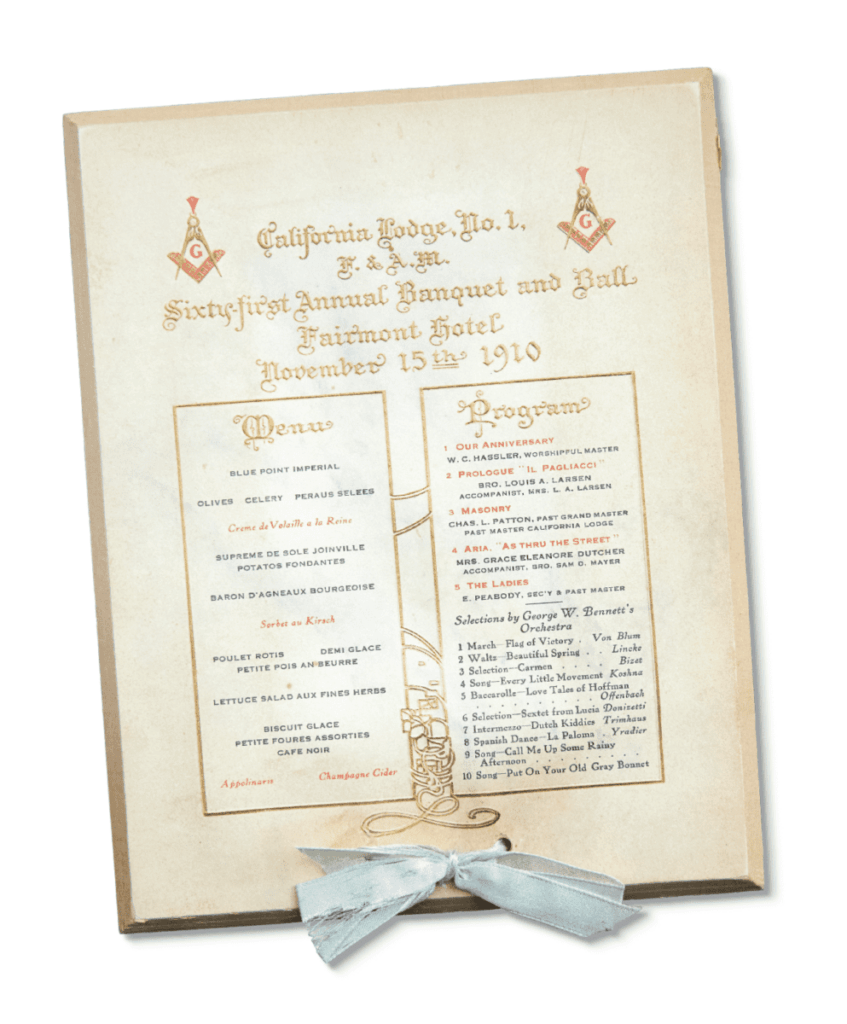
Historical Masonic menu cards preserved in archives show just how elaborate some Lodge meals eventually became. By the early twentieth century, Masonic banquets could feature formal multicourse dinners with printed menus and polished presentation. Modern American Lodges range from pancake breakfasts and cookouts to formal festive boards and dinners.
Somewhere along that long culinary journey, many American Lodge kitchens arrived at an extremely practical conclusion:
Open can.
Heat beans.
Serve Brothers.
Done.
Why Green Beans?
Here is my theory.
Not Masonic history.
Just a guy who has eaten enough meals in Lodge basements.
Green beans are cheap.
They are easy.
You can buy them in quantity.
You can heat them without requiring a culinary degree.
They do not offend many people.
They sit reasonably well next to chicken, ham, roast beef, meatloaf, turkey, steak or whatever else the Junior Warden managed to arrange that evening.
Most importantly, they are difficult to completely ruin.
Possible?
Absolutely.
We are Freemasons, after all.
But difficult.
That makes green beans almost perfectly suited to the American Lodge dinner.
Eventually repetition becomes tradition.
Tradition becomes a joke.
The joke becomes culture.
Then somebody makes a lapel pin.
That somebody was us.
The Junior Warden Understands
Every jurisdiction handles Lodge responsibilities a little differently, but in many Lodges the Junior Warden and Brothers working with him become closely associated with refreshment, meals and fellowship.
The purpose of those meals goes well beyond preventing Brothers from entering a stated meeting hungry. A California Lodge described refreshment in the South as a way to create a welcoming atmosphere where Brothers gather, socialize and strengthen fellowship.
That part matters.
Because some of the best conversations in Masonry never happen while Lodge is open.
They happen downstairs.
Or upstairs.
Or in the parking lot afterward.
They happen while somebody is cutting cake.
While somebody else is making coffee strong enough to remove paint.
While three Past Masters are explaining to the Junior Warden how the previous Junior Warden cooked the same dinner differently.
That meal is where the new guy starts becoming one of the guys.
It is where you learn names.
Where the Brother sitting across from you tells you about his first degree.
Where somebody invites you to visit another Lodge.
Where stories get repeated for the 40th time and everyone politely behaves as though they have never heard them.
And sitting quietly on the plate throughout all of this?
Green beans.
This Is Why Masonic Humor Works
Good Masonic humor is rarely about making fun of Freemasonry.
It is about recognizing Freemasonry.
There is a difference.
The best jokes are funny because Brothers have lived them.
The Past Master who begins a sentence with:
“When I was Worshipful Master…”
The meeting that should take twenty minutes.
The Brother who asks a question exactly when everyone thinks they are about to close.
The committee.
Any committee.
The mysterious disappearance of pens.
Coffee.
Parking.
Green beans.
None of these are obligations, passwords or secrets.
They are just little pieces of the shared experience.
Spend enough years visiting Lodges and you discover that despite different ritual, different jurisdictions, different buildings and very different personalities, some experiences seem strangely familiar.
That shared recognition is part of Brotherhood.
Humor simply gives it somewhere to go.
Then I Put It on a Can
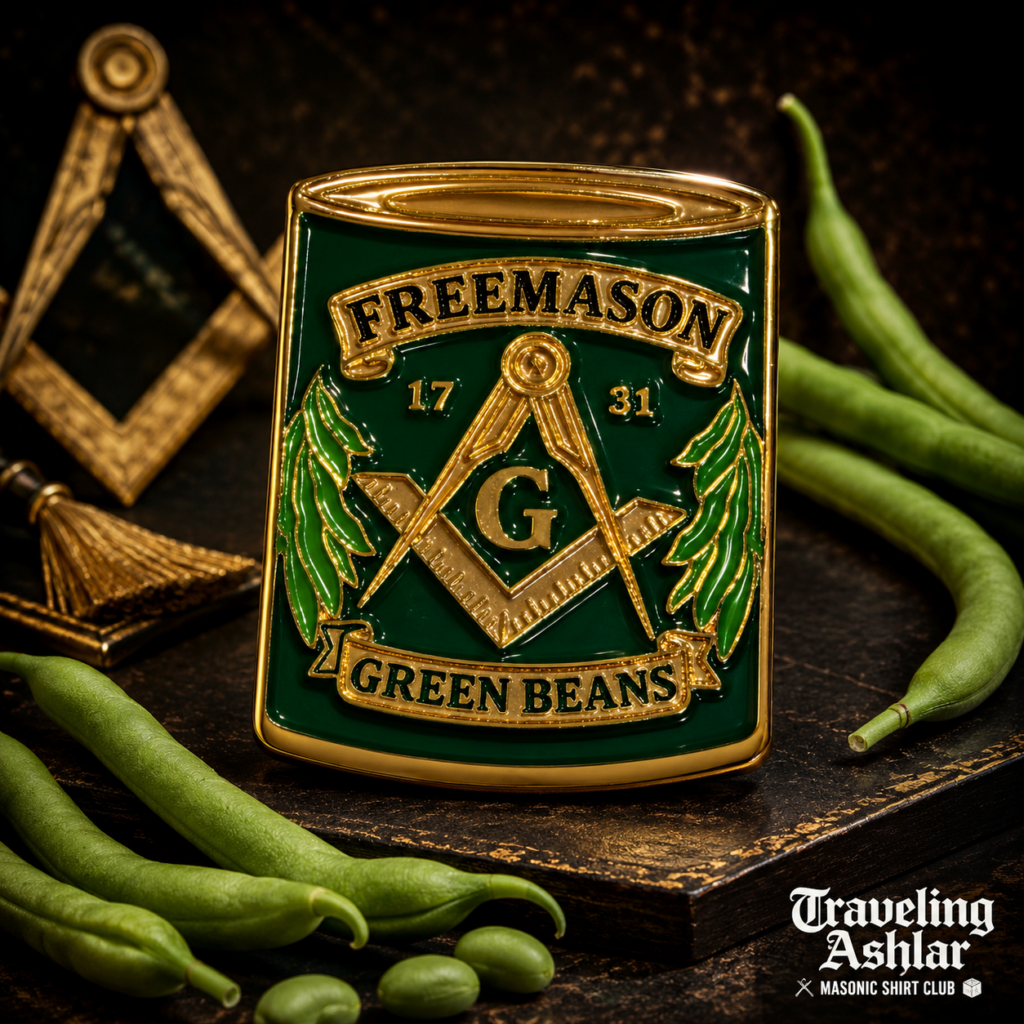
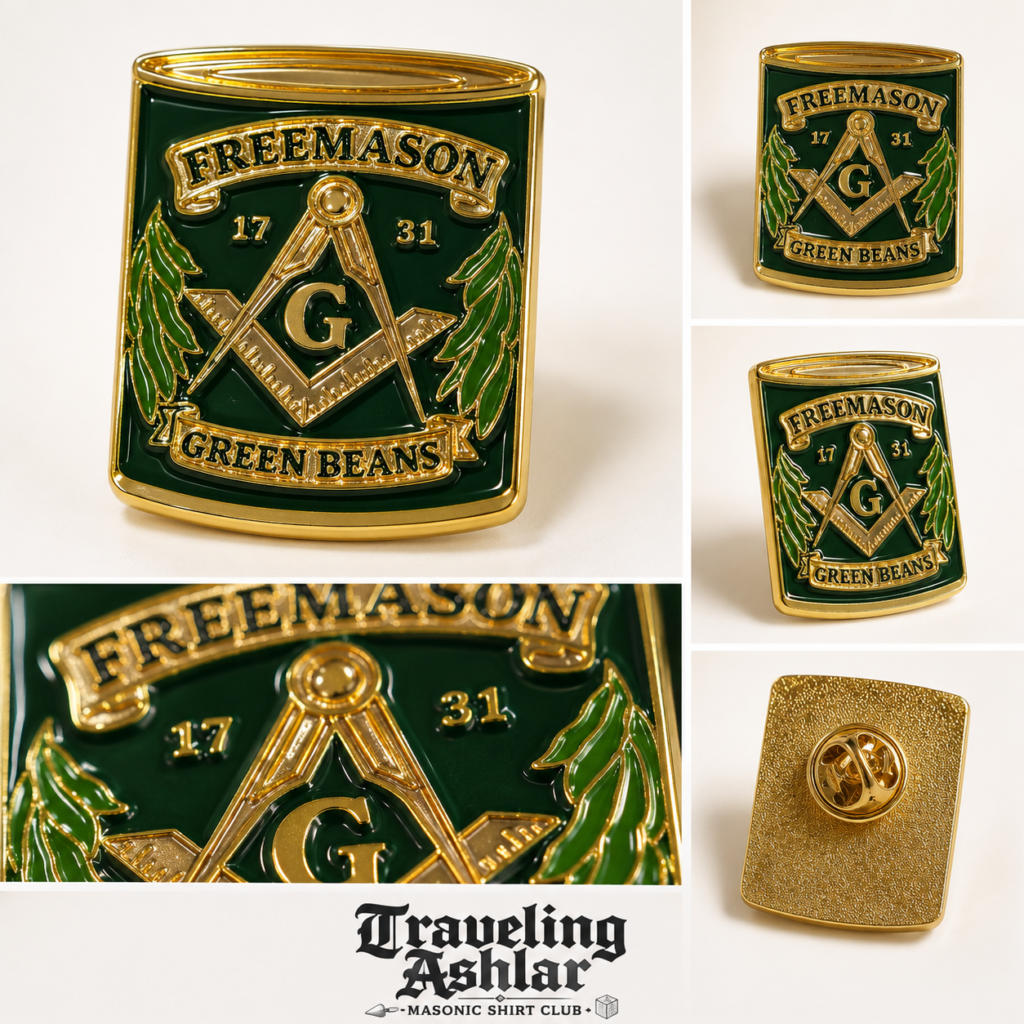
The Traveling Ashlar Masonic Canned Green Beans Lapel Pin looks exactly as ridiculous as it should.
Shop the Masonic Green Beans Lapel Pin
At first glance, it is a vintage-style can of green beans.
Look closer.
There is the Square and Compasses.
The letter G.
FREEMASON across the top.
GREEN BEANS across the bottom.
Dark green enamel.
Raised gold-tone details.
A tiny piece of Masonic nonsense that looks just legitimate enough that somebody who is not a Mason might wonder whether canned green beans actually play some ceremonial role in Freemasonry.
They do not.
Please do not start that rumor.
We have enough problems with the internet already.
The pin is a Traveling Ashlar exclusive, sold separately from the monthly shirt club. It is currently offered individually or as a two-pack, specifically because this is exactly the kind of thing a Brother buys and immediately realizes another Brother needs.
The Beauty Is That Most People Won’t Get It
That may be my favorite part.
Wear a giant Square and Compasses and everyone understands that it means something Masonic.
Wear a tiny can of green beans on your lapel?
Now we have levels.
A non-Mason sees a funny vegetable pin.
A new Mason may stare at it suspiciously.
A Brother who has been around awhile sees it from six feet away and starts laughing.
That is exclusivity done correctly.
Not:
“You can’t have this.”
More:
“You won’t understand why this is funny until you’ve been there.”
There is a difference.
The complete meaning comes from experience.
You cannot really manufacture that.
It is earned one stated meeting dinner at a time.
The Lapel Pin Has Always Been Perfect for Masonry
There is something about Masons and small pieces of metal.
We like pins.
Coins.
Jewels.
Rings.
Things quietly attached to jackets.

Masonic jewels themselves have a long history. After the formation of the premier Grand Lodge in London, Masters and Wardens were required to wear jewels of office, including forms of the Square, Level and Plumb. Over time, Masonic jewels became increasingly elaborate and were also used to recognize service and achievement.
The modern Masonic lapel pin is obviously much less formal.
That is what makes it useful.
A lapel pin can go anywhere.
Lodge.
Dinner.
Work.
A visitation.
A convention.
A baseball game.
An airport.
A jacket.
A hat.
A travel bag.
It does not need to announce itself.
The right person notices.
That moment is the entire point.
A Very Different Kind of Freemason Gift
Search Masonic gifts online and you can become overwhelmed fairly quickly.
Square and Compasses everything.
Mugs.
Wallets.
Rings.
Knives.
Signs.
Shirts.
Tumblers.
Things that light up.
Things that probably should not light up.
There are plenty of perfectly good Freemason gifts out there.
But the pieces I like most have a story attached to them.
Even better if there is a joke attached too.
That is where the green beans pin earns its place.
This is not something you give a random coworker.
You give it to your candidate after he has eaten enough Lodge meals to understand.
You hand it to the Junior Warden.
You give it to the Brother who somehow gets assigned to the kitchen every month.
You bring one to the guy who has complained about canned green beans at every dinner since 1987.
You put it on the Worshipful Master’s jacket five minutes before installation and see how long it takes him to notice.
That is a funny Masonic gift with an audience.
And the audience is us.
One for You. One for a Brother.
This might be one of the rare products where I think the two-pack makes more sense than the single.
Keep one.
Give one away.
That is basically Masonry anyway.
You accumulate things.
Then eventually you start handing them to younger Brothers.
Books.
Pins.
Coins.
Old programs.
Stories.
Advice they did not ask for.
Occasionally green beans.
The Traveling Ashlar pin is currently $9.99 individually, with a two-pin option available for the Brother who already knows exactly who is getting the second one.
Shop the Masonic Green Beans Lapel Pin
No grand presentation necessary.
Just hand it over.
“Saw this. Thought of you.”
Done.
Maybe It Was Never About the Green Beans
There is a strange thing that happens when you have been around a Lodge long enough.
You start becoming sentimental about things you once made fun of.
The terrible coffee.
The same folding chairs.
The old guy who always sat in the same place.
The kitchen.
The dinners.
The drive home afterward.
One day you realize some of the Brothers who used to sit across from you are no longer there.
Suddenly the ordinary parts do not feel quite so ordinary.
That is why I think the green bean joke has survived.
It is not really about canned vegetables.
It is about familiarity.
You walk into a Lodge hundreds of miles from home.
Different room.
Different ritual.
Different Brothers.
Then somebody says dinner is ready.
You sit down.
There is meat.
There are potatoes.
You look down.
Green beans.
Of course.
And for just a second, this place you have never visited before feels strangely familiar.
That is Freemasonry.
The Traveling Part Matters
Traveling Ashlar was built around the idea that Masonry becomes considerably more interesting when you leave your own Lodge building.
Visit.
Travel.
See degrees worked differently.
Meet Brothers from somewhere else.
Eat their food.
Especially eat their food.
You learn things about a Lodge at the dinner table that you will never find on its website.
Maybe the building has an incredible history.
Maybe the guy beside you has been a member for 60 years.
Maybe the Lodge has a recipe they have been making for generations.
Maybe they ordered pizza.
That happens too.
The meal itself is not the important part.
Sitting down together is.
Food has accompanied Masonic meetings and celebrations for centuries, from tavern meetings in the fraternity’s early history to the enormous variety of Lodge meals served today.
The green beans are just our little American footnote.
A very well-cooked footnote, hopefully.
Wear the Joke
So yes.
Traveling Ashlar made a can of green beans into a Freemason lapel pin.
No profound allegory.
No newly discovered manuscript.
No claim that King Solomon personally preferred Del Monte.
It is simply a nod to something Brothers recognize.
A little piece of Lodge culture.
A conversation starter.
A joke you can wear to stated meeting.
And maybe, underneath all of that, a reminder of the meals, ridiculous conversations and Brothers who made those ordinary evenings worth remembering.
Sometimes Masonic history is carved into a cornerstone.
Sometimes it hangs in a museum.
Sometimes it is preserved in an old Lodge minute book.
And sometimes it comes in a can.
Traveling Ashlar Masonic Canned Green Beans Lapel Pin
Shop the Masonic Green Beans Lapel Pin
Vintage canned-goods styling. Dark green enamel. Raised gold-tone details. Square and Compasses. A Traveling Ashlar exclusive made specifically for the Brother who does not need the joke explained.
Wear it to Lodge. Give one to a Brother. Then pass the green beans.
Wear. Share. Travel.
Traveling Ashlar
travelingashlar.com
Freemason gift · Freemasons gift · Masonic brotherhood · Gift a membership
Keep reading
National Baseball Hall of Fame
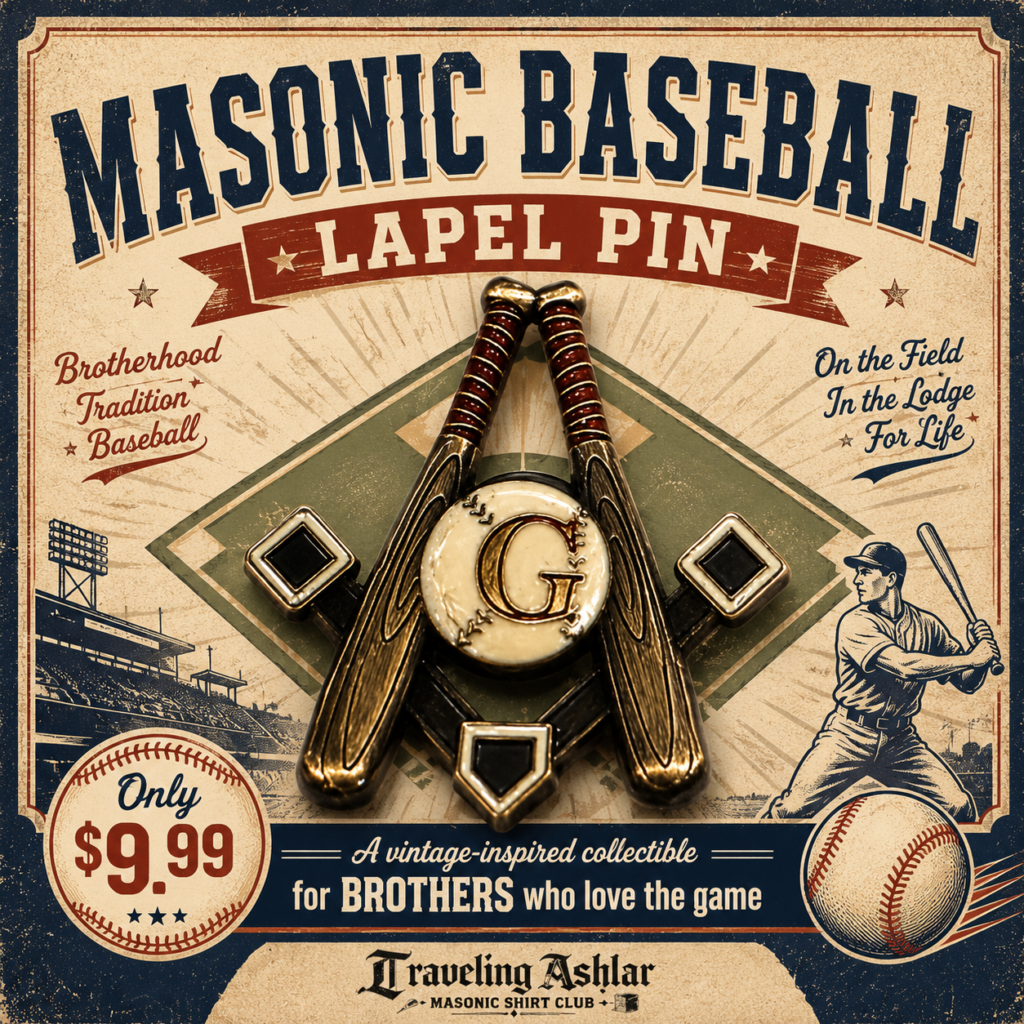
If You Know, You Know: Freemasonry, Baseball, and the Masonic Baseball Lapel Pin
Oklahoma Masonic Indian Degree Team
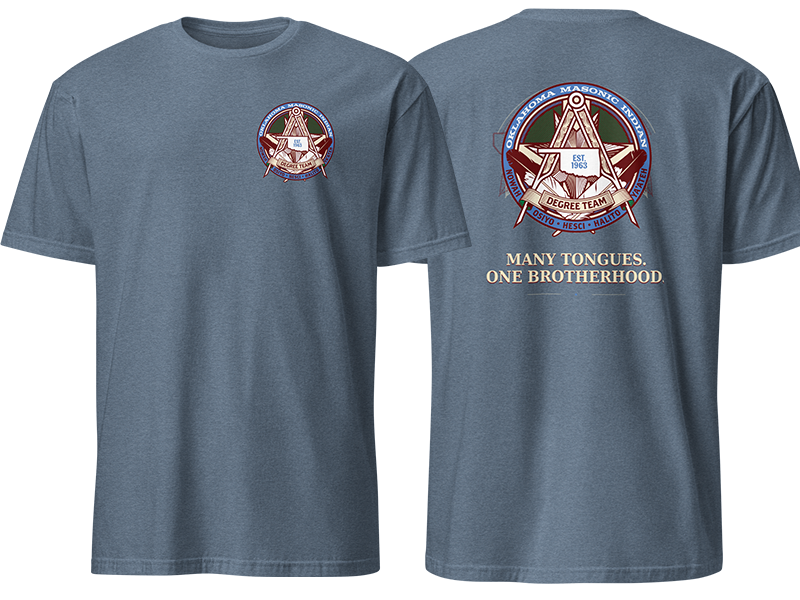
They Bring the Degree With Them: The Oklahoma Masonic Indian Degree Team

Brandywine Battlefield Park
Some Degrees Are Worth the Drive: The Brandywine Battlefield Degree
Shop this story: a freemason gift for the road
Send a freemasons gift that belongs to the masonic brotherhood: a membership, an exclusive, or the shirt tied to this place.
Green Beans Lapel Pin | Funny Freemason Gift
Price range: $9.99 through $18.95
View product
Traveling Ashlar 12 Month Gift Membership
One-time prepaid: includes 12 monthly shipments for the recipient.
View product