Traveling Ashlar Blog National Baseball Hall of Fame
If You Know, You Know: Freemasonry, Baseball, and the Masonic Baseball Lapel Pin
Explore the surprising history connecting Freemasonry and baseball, from Masonic baseball leagues to Ty Cobb, Cy Young and Honus Wagner, and discover the Traveling Ashlar Masonic Baseball Lapel Pin.
Masonic History You Can Wear
Some Masonic things are meant to be seen from across the room.
A big Square and Compasses on the back of a shirt is not exactly subtle.
A lapel pin is different.
It waits.
Someone has to notice it.
Maybe you are sitting at a bar before a baseball game. Maybe you are in an airport. Maybe you are walking into Lodge wearing the same blue blazer you have owned since the George W. Bush administration.
A Brother looks at your lapel.
Then looks at you.
There is usually a slight nod.
No explanation required.
If you know, you know.
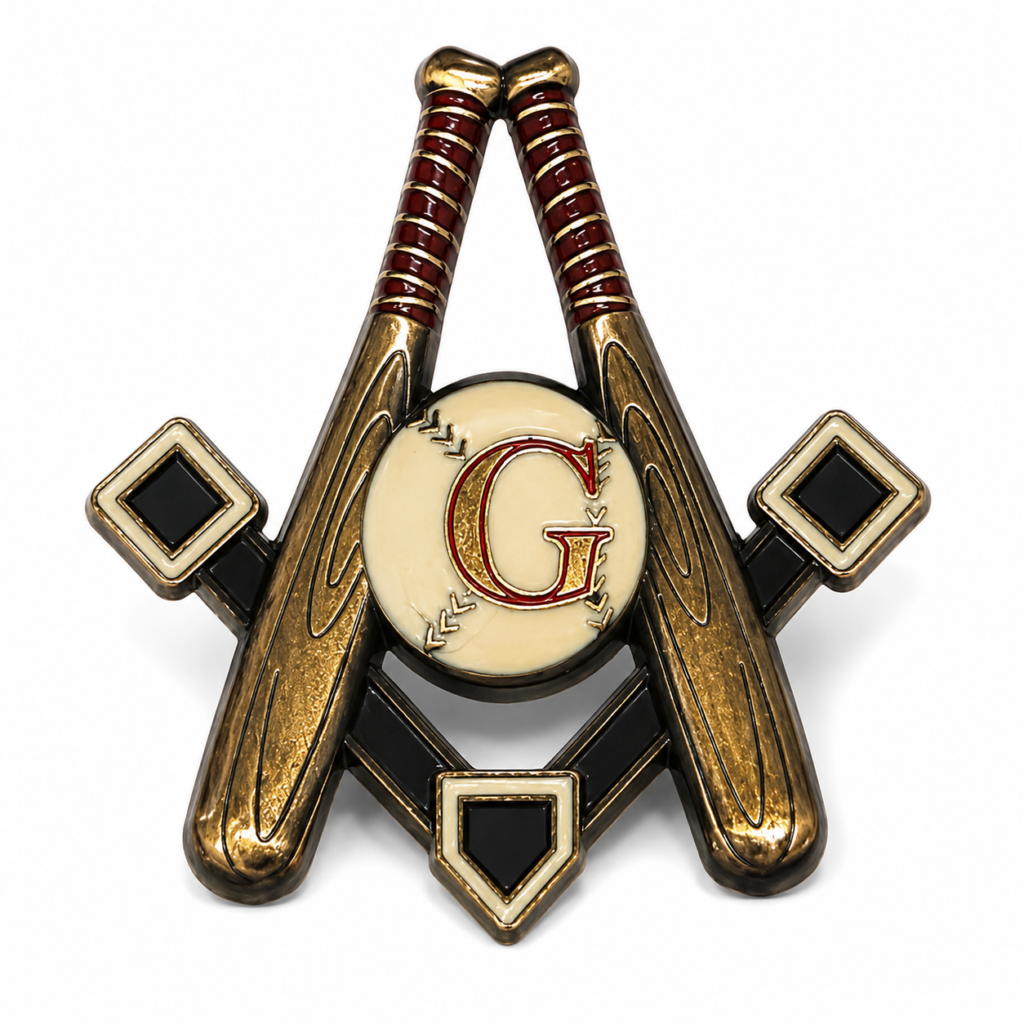
Shop the Masonic Baseball Lapel Pin
That little moment is part of what I like about Masonic lapel pins.
They are not billboards.
They are signals.
And when we designed the Traveling Ashlar Masonic Baseball Lapel Pin, there was considerably more history behind those crossed bats than I originally expected.
Because Freemasonry and baseball have been hanging around each other for a very long time.
Long before $14 beers, pitch clocks and somebody trying to convince me that nachos belong in a souvenir batting helmet.
Baseball and Freemasonry Were Already Teammates
Baseball became deeply woven into American life during the late nineteenth and early twentieth centuries.
So did fraternal organizations.
It probably should not surprise anyone that eventually the two ended up on the same field.
The Scottish Rite Masonic Museum & Library has documented Masonic baseball leagues operating around the United States in the early 1900s, including teams in Detroit, Duluth, Newark and western New York. Freemasons in Duluth organized an indoor baseball league in 1914 that continued into the 1920s.
Yes.
An indoor Masonic baseball league.
Apparently Lodge committees were not enough competition.
One surviving artifact makes the story particularly good.
The Scottish Rite Masonic Museum & Library owns an old pinstriped baseball jersey bearing the name “Ionic.” On the sleeve is a blue patch displaying the Square and Compasses with the letter G.
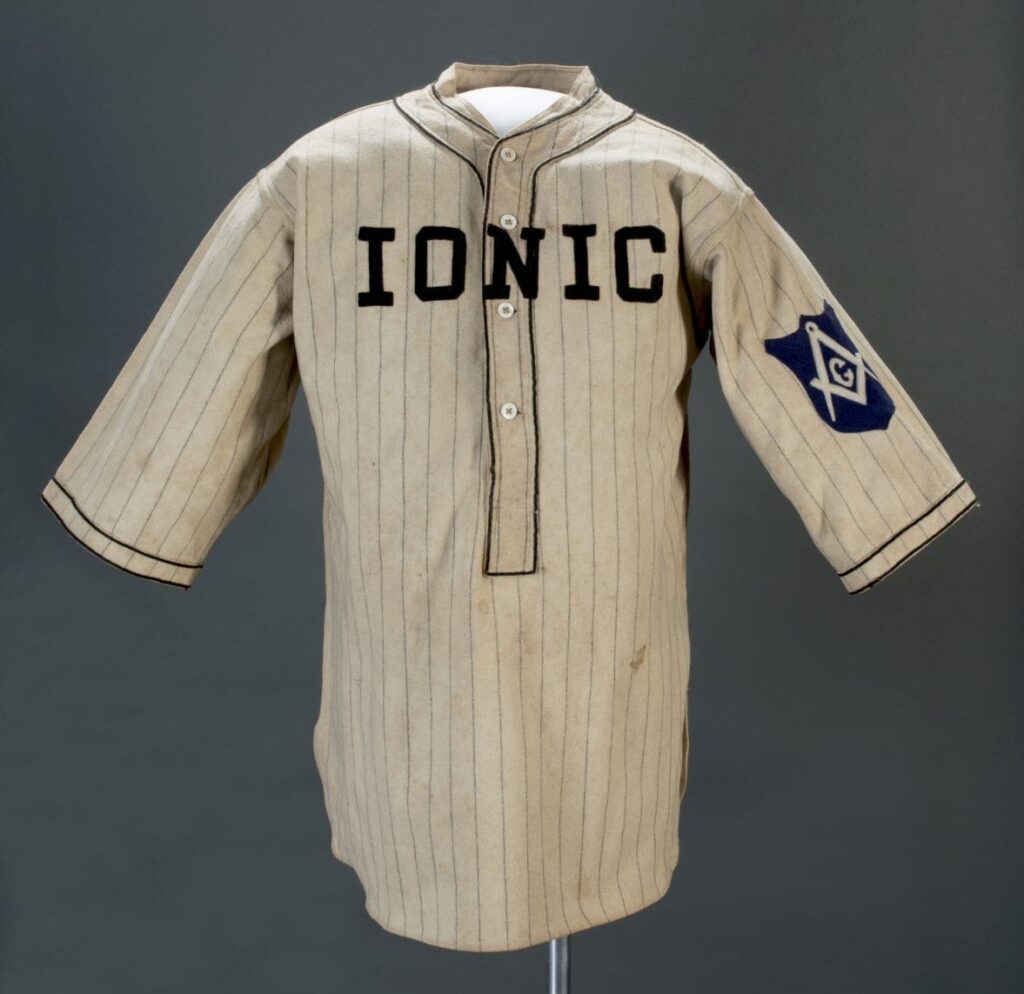
Research dates the jersey to roughly 1916 through 1925, and historians believe it was worn by a player in one of these Masonic leagues. A Detroit Ionic team appears repeatedly in newspaper accounts between 1917 and 1921 and won its league championship in 1918, although researchers have not been able to conclusively prove the museum’s jersey belonged to that exact team.
Think about that image.
Pinstripes.
Leather glove.
Wool uniform.
Square and Compasses on the sleeve.
A hundred years before Traveling Ashlar put crossed bats around a baseball G, Brothers were already finding ways to put Masonry on the ballfield.
Lodge Against Lodge
It gets better.
This was not limited to organized Masonic leagues.
Lodges played one another.
The museum holds a ticket from June 24, 1911, advertising a baseball game between Franklin Lodge No. 10 of Irvington, New Jersey, and Oriental Lodge No. 51 of Newark. Contemporary newspaper reporting described their matchup as an annual tradition that generated both fraternal and community interest.

I would have liked to attend one of those games.
Mostly because I want to know how seriously the Brothers took it.
You know somebody showed up claiming it was “just fellowship.”
Then argued a called strike for twenty minutes.
Some things in Masonry transcend generations.
Baseball games were played during Lodge excursions, between local Masonic teams and as charity events. The historical record makes it clear that the connection between baseball and Freemasonry was not simply a handful of famous Major League players who happened to become Masons.
Baseball itself became part of fraternal life.
Then There Was an Actual Masonic All-Star Game
This may be my favorite piece of the entire story.
In 1935, professional baseball players who were Freemasons took the field in Trenton, New Jersey, for an All-Star Masonic Baseball Game.
Not a fantasy roster.
Not a modern promotional idea.
An actual game.
The Tall Cedars of Lebanon, Trenton Forest No. 4, sponsored the event at Wetzel Field. National League Masons played American League Masons, with the National League winning 7 to 6. The event raised money for Masonic charitable causes.
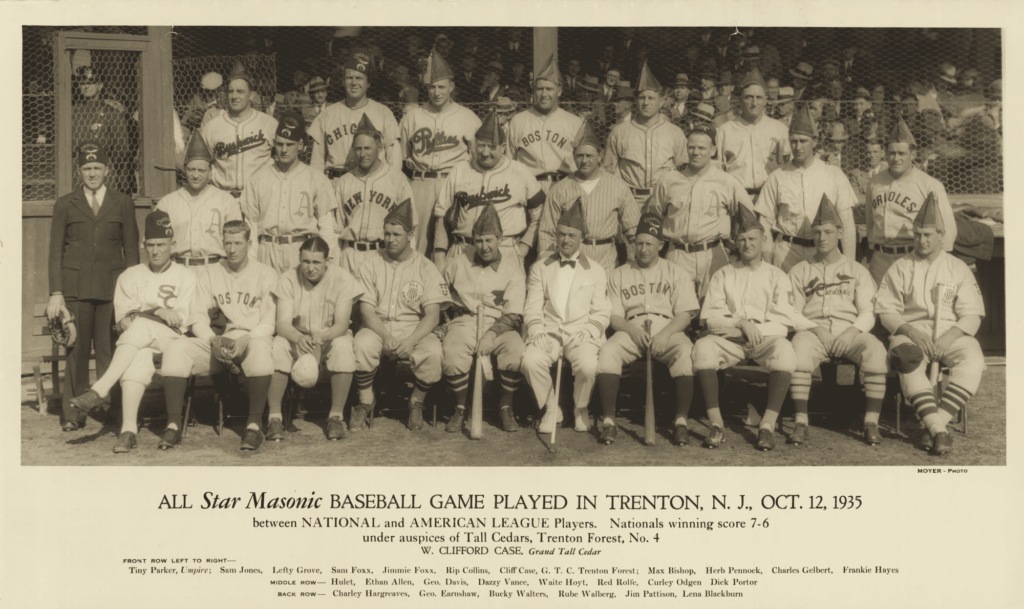
The surviving team photograph is magnificent.
Professional baseball uniforms.
Masonic Tall Cedars hats.
Players from both leagues.
A collision of two pieces of American culture that, at the time, probably did not seem strange at all.
Baseball belonged to the community.
So did the Lodge.
Some Very Good Ballplayers Were Brothers
Now we arrive at the names.
And these are not obscure utility infielders somebody discovered in the back of a Lodge ledger.
We are talking about some of the greatest players in baseball history.
Ty Cobb.
Cy Young.
Honus Wagner.
Rogers Hornsby.
All four are identified in Masonic historical sources as Freemasons.
That is a fairly respectable lineup.
Brother Ty Cobb
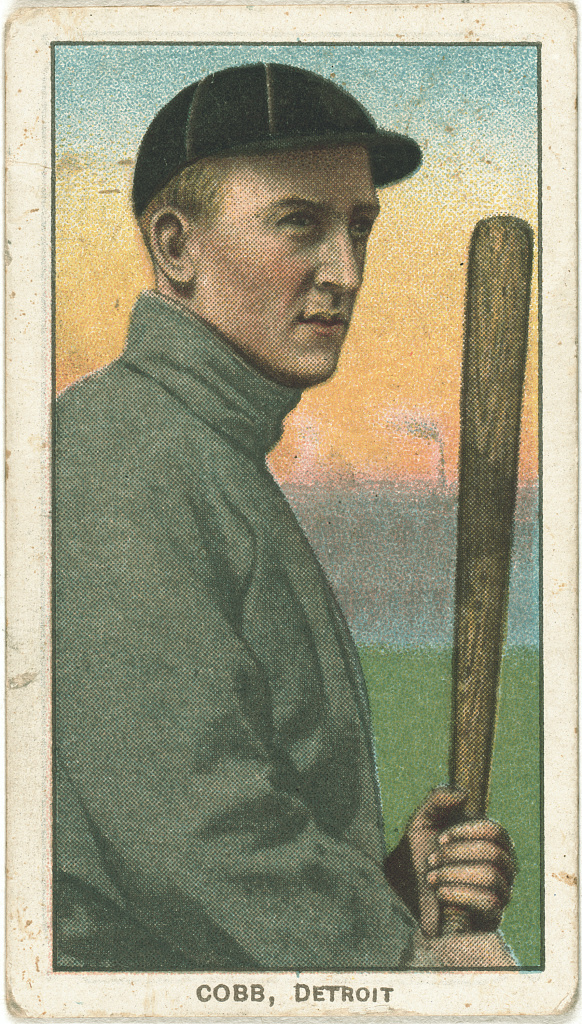
Ty Cobb became a Mason while still a young ballplayer and later received the 32° in the Scottish Rite. The Scottish Rite identifies him as a member of Royston Lodge and notes his family’s own Masonic history.
Whatever debates continue around Cobb’s personality and legacy, his baseball numbers remain staggering.
When the Baseball Hall of Fame held its first election in 1936, Cobb received 222 of 226 votes, more than Babe Ruth, Honus Wagner, Christy Mathewson or Walter Johnson.
The Georgia Peach was a Brother.
Brother Honus Wagner

Honus Wagner was a member of Centennial Lodge No. 544 in Carnegie, Pennsylvania. Scottish Rite records identify his initiation date as May 19, 1919.
Wagner spent most of his 21-season career with the Pittsburgh Pirates and became one of the first five players elected to the Baseball Hall of Fame in 1936.
He is also the guy on that baseball card.
You know the one.
The card you wish your grandfather had placed carefully in a safe instead of attaching to his bicycle with a clothespin.
Brother Cy Young

Then there is Denton True “Cy” Young.
The award for the best pitcher in baseball literally carries his name.
Young was a member of Mystic Tie Lodge No. 194 in Dennison, Ohio, where the Grand Lodge of Ohio records that he was raised on February 29, 1904.
Young finished his career with 511 victories, a Major League record that remains almost absurd when viewed through modern baseball.
Every season, baseball announces a new Cy Young Award winner.
Most fans hear the name.
Far fewer know Cy Young was a Freemason.
Now you do.
Brother Rogers Hornsby

Rogers Hornsby belongs on the list as well.
California Freemason identifies Hornsby among the Hall of Fame players who were active Masons.
His baseball résumé does not need much help.
Hornsby hit .424 in 1924, still the modern National League single-season record, and finished his 23-year Major League career with a .358 batting average. He entered the Baseball Hall of Fame in 1942.
Imagine a Lodge baseball team trying to decide who bats third.
Cobb?
Wagner?
Hornsby?
Good luck, Worshipful Master.
Baseball Was Even Used as a Masonic Mark
There is another artifact I particularly like because it makes this connection personal.
Harry Wellington Davis was a Massachusetts Freemason and baseball player in the nineteenth century.
When Davis selected his personal mark for his Royal Arch Mark Degree, he chose imagery representing something important to him:
crossed baseball bats, a baseball cap and a ball.
The Scottish Rite Masonic Museum & Library still preserves the record.
That stopped me when I first read it.
Because more than a century later, we essentially arrived at the same thought.
What happens when something a Brother loves outside the Lodge meets something meaningful inside it?
For Davis, it became his Masonic mark.
For us, it became a lapel pin.
Why a Lapel Pin?
There is something wonderfully old-fashioned about a lapel pin.
I mean that as a compliment.
Freemasonry has always communicated heavily through symbols. The Grand Lodge of California points out that Masonic symbols appear everywhere from architecture down to dime-sized lapel pins, precisely because symbols can communicate something quickly without needing an explanation.
That is exactly what a good Masonic pin does.
You do not need six inches of embroidery.
You do not need FREEMASON printed across your back.
Sometimes something the size of a nickel does the job better.
A Square and Compasses on a lapel tells another Brother something instantly.
Membership.
Recognition.
Shared experience.
Maybe an opening to a conversation.
I have always liked that understated side of Masonry.
The little Square and Compasses on a sport coat.
A ring noticed while somebody reaches for a coffee.
A pin on a travel bag.
Tiny objects that occasionally turn complete strangers into Brothers standing in an airport talking for twenty minutes.
That is the exclusiveness of a Masonic lapel pin.
Not exclusive in the sense of looking down on anyone.
Exclusive because the complete meaning belongs to the men who earned the right to understand it.
Everyone else can simply think it looks good.
So We Hid the Square and Compasses in Baseball
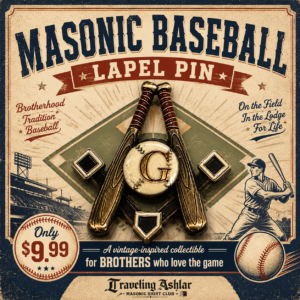
That became the idea behind the Traveling Ashlar Masonic Baseball Lapel Pin.
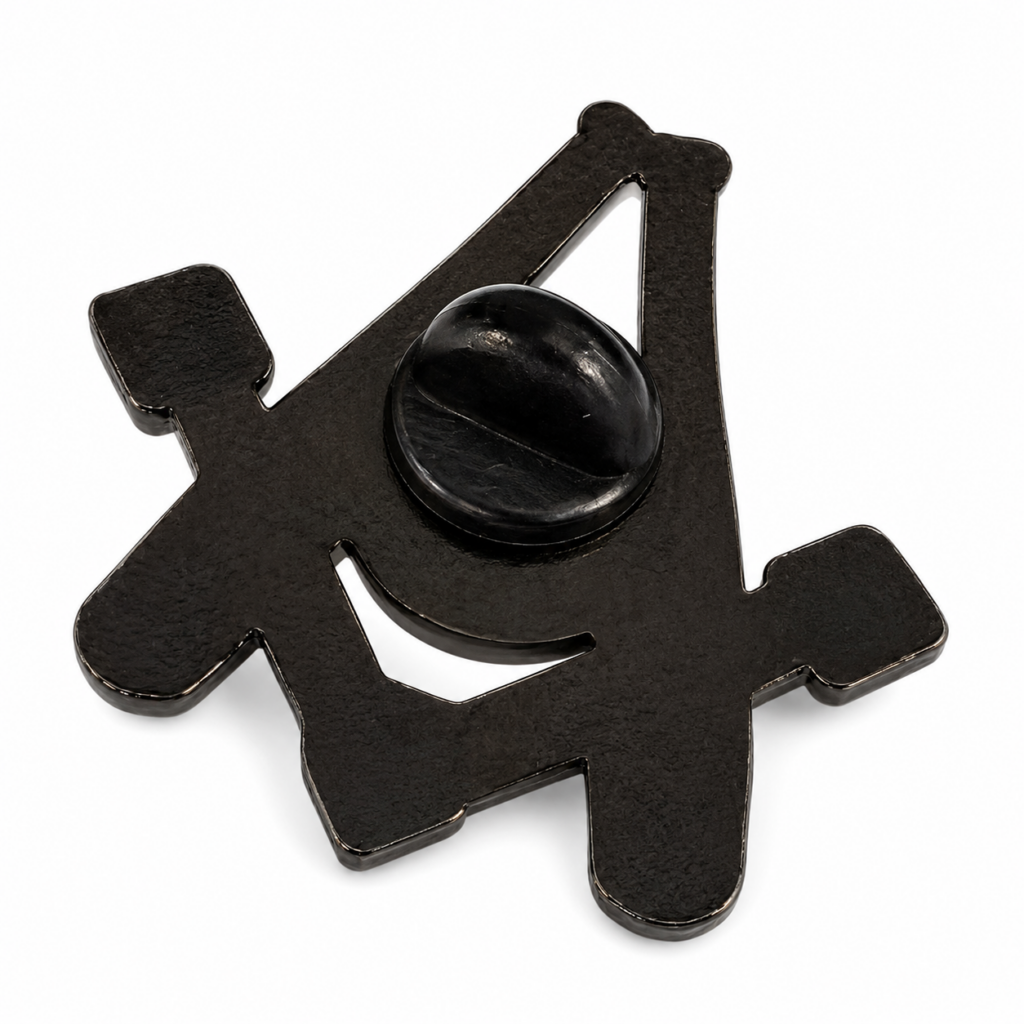
At first glance, it looks like an old baseball emblem.
Look closer.
The bats form the Square and Compasses.
A vintage baseball sits at the center carrying the letter G.
Home plate creates the bottom point.
Antique gold, cream and crimson enamel give it the feel of something that might have been handed out at a ballpark several generations ago.
Across the room, baseball.
Up close, Masonry.
That was intentional.
A Brother will catch it.
Someone else might not.
Perfect.
This One Is Not Part of the Monthly Shirt
Traveling Ashlar started with the idea of sending a new Masonic story down the road every month.
Shirt.
Postcard.
Sticker.
Something tied to a place, Lodge, event or tradition worth knowing.
But occasionally we come across something that does not need to become a monthly shirt.
It needs to become something smaller.
The Masonic Baseball Lapel Pin is a Traveling Ashlar exclusive, offered separately from the monthly shirt club. The current design uses an antique-gold finish with cream and crimson enamel and a secure clutch back, so it can live on a jacket, baseball cap, bag or Lodge-night coat.
It is deliberately small.
Because that is the point.
A Masonic Gift That Starts a Conversation
There are plenty of options when searching for Masonic gifts, Freemason gifts, Master Mason gifts or gifts for Freemasons.
The problem is not finding something.
The problem is finding something with a reason behind it.
I like objects that give you something to tell.
This one does.
Someone sees it and asks:
“What’s with the baseball bats?”
Now you have the story.
Tell them about the Masonic baseball leagues.
Tell them about the 1911 Lodge game in New Jersey.
Tell them there was an actual Masonic All-Star Game in 1935.
Tell them Ty Cobb was a Brother.
So was Honus Wagner.
So was Cy Young.
Tell them a nineteenth-century Mason loved baseball enough to select crossed bats and a ball as his personal Masonic mark.
Suddenly the little pin is not just merchandise.
It has provenance.
Or at least enough history behind it to make the seventh-inning stretch considerably more interesting.
One for You. One for a Brother.
There is another thing lapel pins are good at.
Being handed to someone.
Coins do this well too.
There is something different about a small Masonic object given Brother to Brother.
Not wrapped.
No ceremony.
Usually just:
“Here. I grabbed one for you.”
Those gifts tend to stick around.
The Baseball Lapel is available individually, and Traveling Ashlar also offers a two-pin option specifically for the Brother who wants to keep one and hand the other to somebody who never misses Opening Day.
Birthday.
Raising.
Father’s Day.
Lodge baseball outing.
Trip to Cooperstown.
Or absolutely no reason whatsoever.
Sometimes that is the better gift.
Baseball and Masonry Make More Sense Together Than You Think
Both are old enough to have accumulated traditions nobody completely remembers starting.
Both rely heavily on ritual.
Both have specific ways things are supposed to be done.
Both have men who will spend an unreasonable amount of time debating rules written generations ago.
Both have buildings containing old photographs of people nobody currently present actually met.
Both have refreshments of varying quality.
The similarities become uncomfortable after a while.
But there is something deeper too.
Baseball is passed down.
So is Masonry.
Someone takes you to your first game.
Someone brings you into a Lodge.
Eventually you become the guy doing the bringing.
That might be why the two have crossed paths so often.
They both work best when somebody older says:
“Come with me. You need to see this.”
Wear Something With a Story
That is ultimately what Traveling Ashlar is trying to do.
Find the stories.
Put something tangible behind them.
Then send them back out into the world.
Sometimes that means driving to a battlefield for a Masonic degree.
Sometimes it means following a degree team from Oklahoma.
Sometimes it means discovering that a century ago, Freemasons were already putting the Square and Compasses on baseball uniforms and playing Lodge against Lodge.
This time, the story fits on a lapel.
Barely an inch of metal.
A couple of crossed bats.
A baseball.
A G.
Most people will see baseball.
A Brother will see something else.
Exactly as intended.
If you know, you know.
The Traveling Ashlar Masonic Baseball Lapel Pin
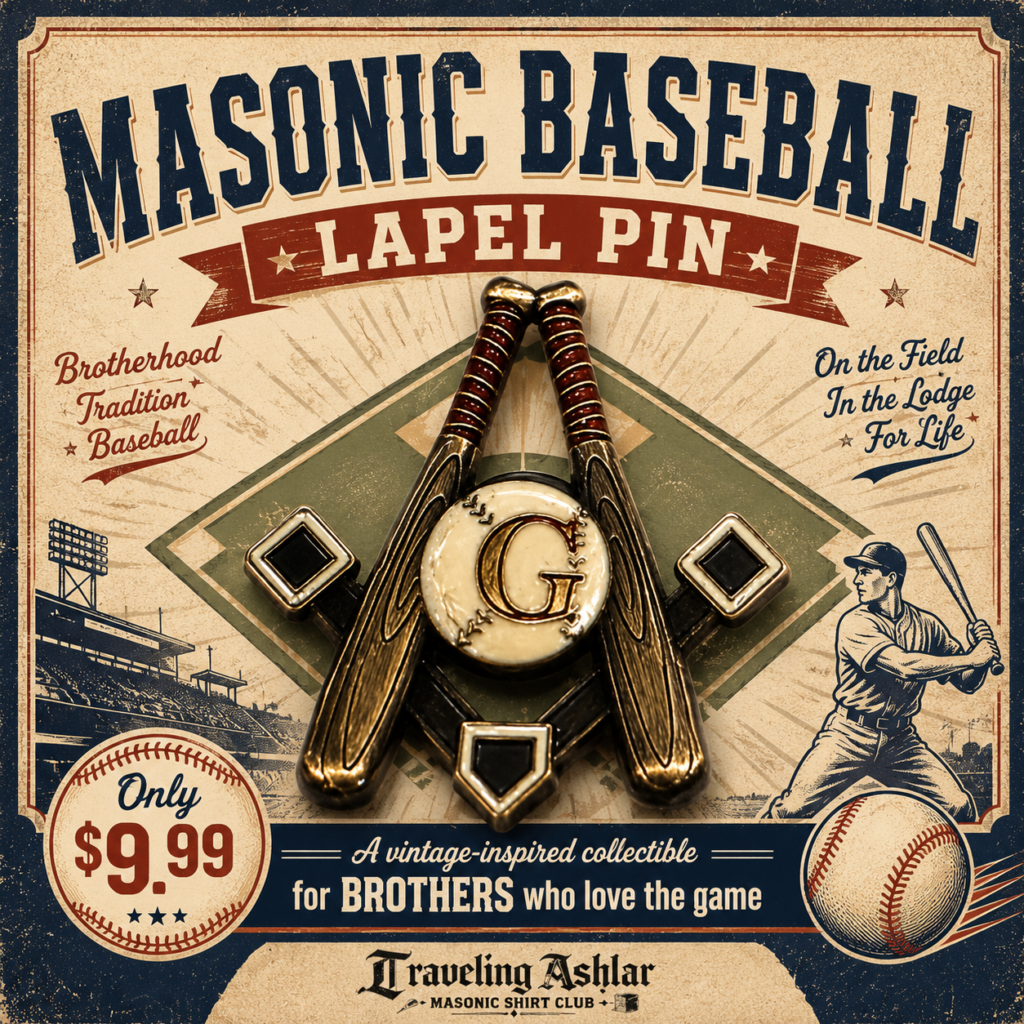
Shop the Masonic Baseball Lapel Pin
Vintage baseball style. Crossed-bat Square and Compasses. Baseball G. Antique-gold finish. A Traveling Ashlar exclusive made for Brothers who love the Craft and the game.
Wear it to Lodge. Wear it to the ballpark. Give one to a Brother.
Wear. Share. Travel.
Traveling Ashlar
travelingashlar.com
Freemason gift · Freemasons gift · Masonic brotherhood · Gift a membership
Keep reading
Goose and Gridiron
The Unofficial Vegetable of Freemasonry
Oklahoma Masonic Indian Degree Team
They Bring the Degree With Them: The Oklahoma Masonic Indian Degree Team
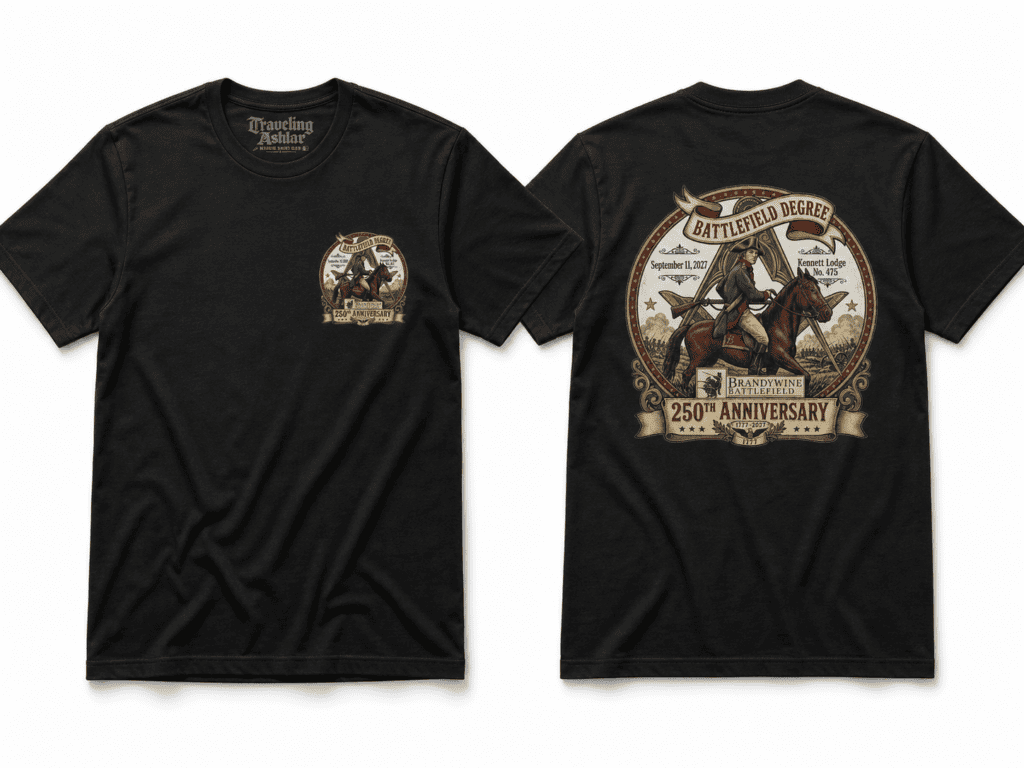
Brandywine Battlefield Park
Some Degrees Are Worth the Drive: The Brandywine Battlefield Degree
Shop this story: a freemason gift for the road
Send a freemasons gift that belongs to the masonic brotherhood: a membership, an exclusive, or the shirt tied to this place.
Masonic Baseball Lapel Pin | Freemason Baseball Gift
Price range: $9.99 through $18.95
View product
Traveling Ashlar 12 Month Gift Membership
One-time prepaid: includes 12 monthly shipments for the recipient.
View product